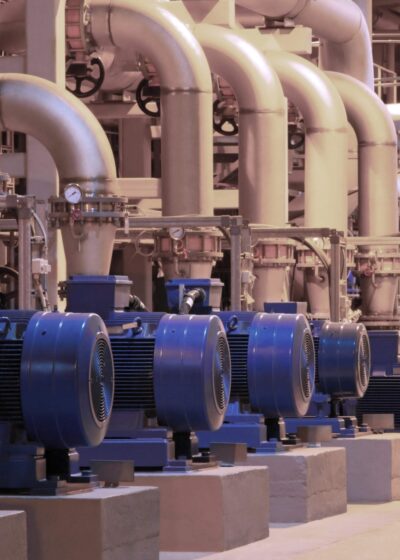
How a Peristaltic Hose Pump Works
A peristaltic pump, also called a hose pump, is a positive displacement pump that moves fluid by progressively squeezing a flexible inner hose or tube. The fluid is contained entirely within the hose throughout the pumping cycle and never contacts the pump casing or any internal mechanism. Both operating designs are self-priming and can run dry without damage, making them suited to viscous, abrasive and shear-sensitive fluids that would cause rapid wear in other pump types. There are two main operating designs: roller-operated and shoe-operated.
Roller-operated peristaltic pumps
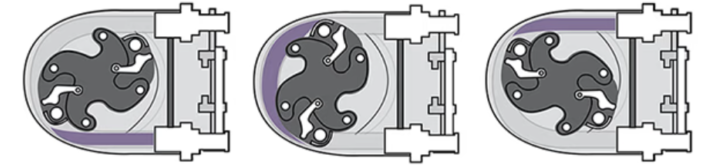
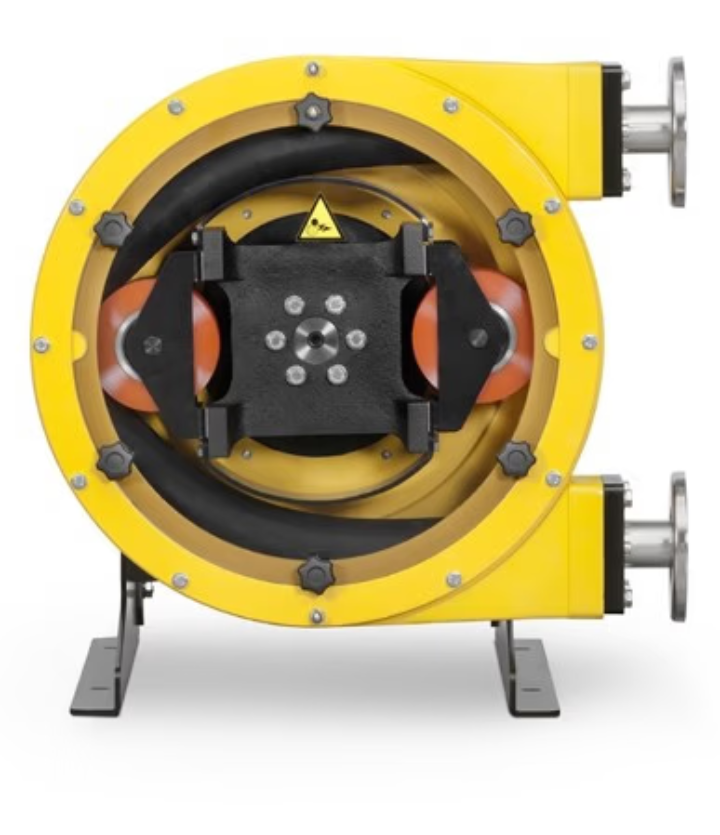
As the rotor turns, attached rollers compress the hose where the fluid is contained, and it is this action that forces liquid from the pump’s inlet to its outlet. Because rollers generate less friction than shoe designs, roller-operated models offer:
- Lower power consumption, with up to 30% energy savings compared to shoe-operated models
- Low starting torque, with smoother operation and easier speed adjustment
- Simpler hose maintenance, as the design does not require lubrication
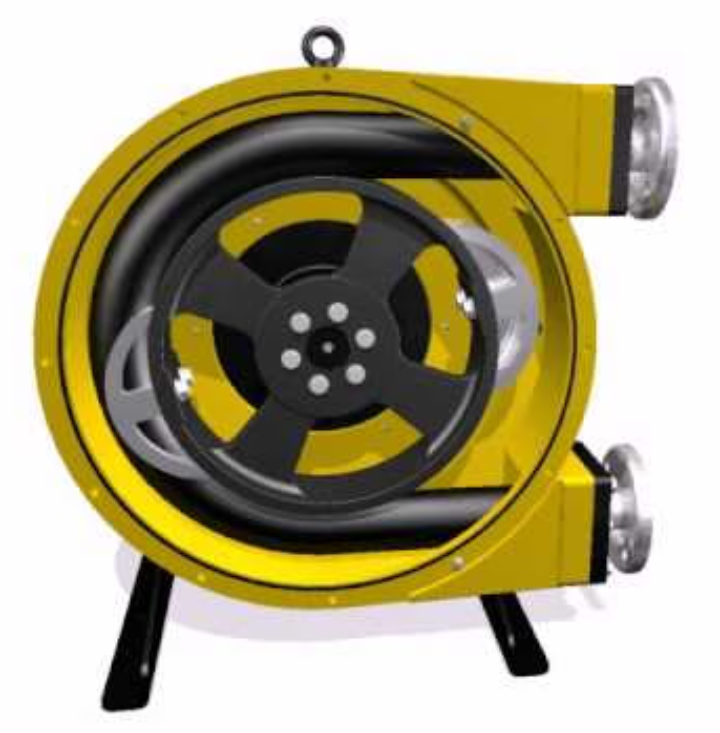
Shoe-operated peristaltic pumps
In a shoe-operated design, an attached shoe compresses the hose to move liquid from inlet to outlet. Compared with roller-operated models, this design:
- Is suited to higher-pressure, heavy-duty applications where roller-operated models cannot efficiently meet the performance requirement
- Uses a lubricant-filled casing to reduce abrasion of the exterior of the internal hose, with lubricant level requiring periodic checking and maintenance
Roller vs shoe pump
The figures below are based on the Boyser pump range supplied by Castle Pumps.
| Feature | Roller-Operated | Shoe-Operated |
| Typical application | Standard to medium-duty industrial applications | Heavy-duty, higher-pressure applications |
| Energy consumption | Up to 30% lower than shoe designs | Higher energy consumption due to increased friction |
| Lubrication | Not required | Lubricant-filled casing required |
| Starting torque | Lower (Up to 20-30%) | Higher (but required for increased discharge pressure) |
| Hose maintenance | Simpler and cleaner - No casing full of lubricant to dispose of or clean up. | More involved - lubricant to dispose of and environmental impact to consider |
| Max pressure (Boyser range) | Up to 8 bar | Up to 15 bar |
| Max solids size (Boyser range) | Up to 65mm (FMP model) | Up to 100mm (RBT model) |
Peristaltic hose pump design benefits
Hose materials table:
| Hose Material | Abbreviation | Best Used For |
| Natural Rubber | NR | Water-based fluids. (Available in food grade NR-A version) |
| Nitrile | NBR | Fats, fuels and oils (Available in food grade NBR-A version) |
| EPDM | EPDM | Hot fluids, clean-in-place applications, acids and alkalis |
| Norprene | Norprene | Good mechanical durability |
| Tygon | Tygon | Low viscosity food and lab products where visual of the fluid is needed during operation (transparent tube). Note: flow rate is 30% less than other tube types |
| Hypalon | Hypalon | Strong acid transfers. Note: suitability depends on the specific acid, as some may degrade the material |
Variety of fluids. In a peristaltic hose pump, the primary component in contact with the fluid is the inner hose, meaning that chemical compatibility is largely determined by the hose material. This simplifies material selection compared to other pump designs, which require multiple wetted components such as seals, valves, and casings to be compatible. By changing the hose material, the pump can be adapted to handle a wide range of solutions. However, it is important to note that the internal surfaces of the inlet and outlet connections also come into contact with the fluid. These wetted parts are typically manufactured from materials such as polypropylene (PP), polyvinylidene fluoride (PVDF), and stainless steel, and are available in a variety of thread configurations to suit different applications.
Leak-free. The pumped liquid is kept fully contained within the inner hose, so peristaltic pumps require no shaft seal. With no seal, this pump type is less prone to leaking, making it a reliable choice for corrosive liquids and dangerous chemicals where a cleaner, safer operation is required.
Excellent solid handling and non-clogging. Peristaltic hose pumps are suited to heavy-duty applications involving viscous slurries and solids. The pump can pass soft particles up to the diameter of the inner hose without clogging, as the squeezing action moves solids through without trapping them.
Low shear. Peristaltic pumps operate with a gentle pumping motion and low RPM. While they are generally gentle on the product, they can still affect very delicate fluid structures or crush entrained solids. However, compared to many other pump types, they are well suited to handling shear-sensitive fluids with minimal degradation.
Reversible operation. Reversing the motor direction allows for filling and emptying applications and the recovery of fluid from the hose at the end of dispensing. This is particularly useful in dosing applications where the hose is regularly reversed to ensure liquid does not leak from the outlet.
Good suction lift and self-priming. Peristaltic hose pumps can self-prime up to 9m and can run dry indefinitely without damage if the operator leaves the pump running unattended.
Low maintenance. The inner hose is the only wetted component and the only wearing part. It can be changed quickly and easily. The absence of valves, seals and glands that clog and wear when in contact with pumped media keeps both maintenance time and spare parts costs low.
Peristaltic hose pump applications
Peristaltic hose pumps are suited to applications where the fluid is viscous, abrasive, shear-sensitive or contains solid particles. Their ability to run dry, self-prime and require only hose replacement for routine maintenance makes them a practical choice across demanding industrial processes.
| Industry | Typical Media | Key Advantage |
| Food and drink manufacturing | Viscous liquids, fruit pulps, sauces, dairy | Fluid contacts only the hose, supporting hygienic operation |
| Wastewater and sewage | Sewage, effluent, wastewater with solids | Handles solids and abrasive content without clogging |
| Organic waste and biomass | Organic sludge, food waste, biomass slurries | Handles viscous, abrasive organic solids without clogging; dry-run safe |
| Civil engineering and mining | Cement, grout, clay, mud, abrasive slurries | Passes abrasive solids, including sharp and stringy material, without damage or clogging |
| Chemical processing | Acids, alkalis, solvents | Full fluid containment, no seal exposed to chemical media |
| Brewing and distilling | Wort, fermented liquids, spirits | Low-shear handling preserves product quality and integrity |
| Paint, ink and dye | Paints, inks, dyes, resins and adhesives | No damage to shear-sensitive or high-solids-content fluids |
| Pulp and paper | Wood pulp, paper stock, fibrous slurries | Handles fibrous, abrasive solids without clogging; gentle on delicate paper stock |
| Oil sludge and waste | Oil sludge, contaminated water | Dry-run capability, handles variable flow and solids content |
Castle Pumps supplies Boyser peristaltic hose pumps across each of these sectors. See our full range of industrial peristaltic pumps, food grade peristaltic pumps, chemical peristaltic pumps and peristaltic dosing pumps.
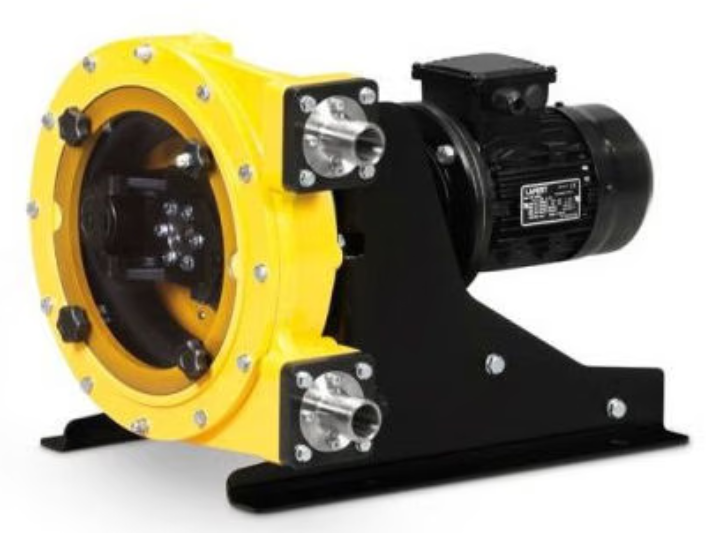
Specify a Peristaltic Hose Pump for Your Application
If you need a self-priming, low-maintenance pump for viscous, abrasive, or shear-sensitive fluids, explore our range of peristaltic hose pumps. Use the on-page filters to refine your search by type, duty and flow to find the right specifications.