Chemical Peristaltic Pumps
Need help specifying the right chemical peristaltic pump? Contact our experts today!
Leak Free Chemical Peristaltic Pumps For Aggressive & Hazardous Fluids
When you are handling acids, solvents or anything corrosive, the weak point in most pumps is the seal. On a hazardous chemical a weeping seal quickly becomes a safety problem rather than just a maintenance one. A chemical peristaltic pump takes that risk away completely, because there is no mechanical seal in the design at all and the chemical stays inside the hose from inlet to outlet without ever touching the pump internals. It also simplifies specification enormously, because compatibility comes down to a single component. Instead of building a whole pump around your fluid we select the right hose material for it, whether that is EPDM, Hypalon, Norprene, Tygon, NBR or natural rubber. Send us the details of the chemical you are handling, along with its concentration and temperature, and our pump experts will confirm the right chemical peristaltic pump and hose material for the application.
View our full range of peristaltic pumps today.
products
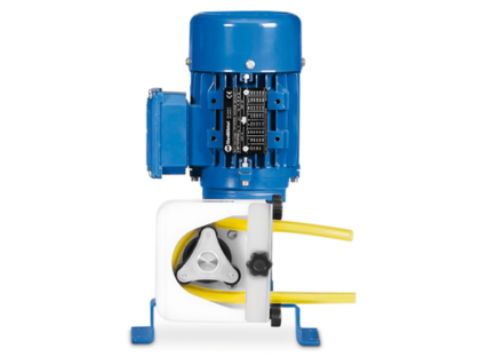
- Max Flow Rate: 1.4lpm
- Max Head: 20M
- Max Temperature: 80ºC
- Max Viscosity: 8000 cP
- Solids: 8mm
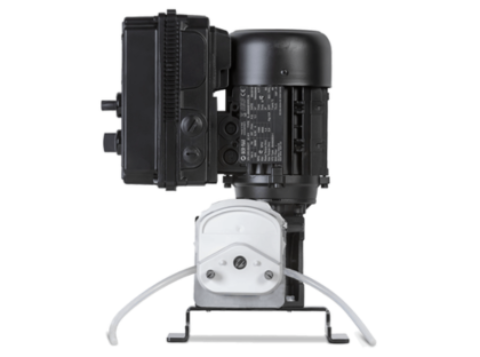
- Max Flow Rate: 0.64lpm
- Max Head: 20M
- Max Temperature: 80ºC
- Max Viscosity: 8000 cP
- Solids: 8mm
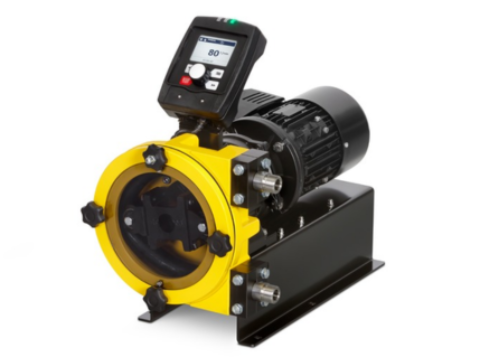
- Max Flow Rate: 6.8lpm
- Max Head: 80M
- Max Temperature: 80ºC
- Max Viscosity: 20000 cP
- Solids: 16mm
- Size: 3/4"

- Max Flow Rate: 2.4lpm
- Max Head: 80M
- Max Temperature: 80ºC
- Max Viscosity: 20000 cP
- Solids: 10mm
- Size: 3/8"

- Max Flow Rate: 3.9lpm
- Max Head: 80M
- Max Temperature: 80ºC
- Max Viscosity: 20000 cP
- Solids: 13mm
- Size: 3/8"

- Max Flow Rate: 9.6lpm
- Max Head: 80M
- Max Temperature: 80ºC
- Max Viscosity: 20000 cP
- Solids: 16mm
- Size: 3/4"

- Max Flow Rate: 12.9lpm
- Max Head: 80M
- Max Temperature: 80ºC
- Max Viscosity: 20000 cP
- Solids: 19mm
- Size: 1"

- Max Flow Rate: 20lpm
- Max Head: 80M
- Max Temperature: 80ºC
- Max Viscosity: 20000 cP
- Solids: 22mm
- Size: 1"

- Max Flow Rate: 33.3lpm
- Max Head: 80M
- Max Temperature: 80ºC
- Max Viscosity: 30000 cP
- Solids: 28mm
- Size: 1 1/4"

- Max Flow Rate: 65lpm
- Max Head: 80M
- Max Temperature: 80ºC
- Max Viscosity: 30000 cP
- Solids: 35mm
- Size: 1 1/2"

- Max Flow Rate: 86.7lpm
- Max Head: 80M
- Max Temperature: 80ºC
- Max Viscosity: 30000 cP
- Solids: 40mm
- Size: 1 1/2"

- Max Flow Rate: 186.6lpm
- Max Head: 80M
- Max Temperature: 80ºC
- Max Viscosity: 30000 cP
- Solids: 55mm
- Size: 2"
FAQs
Peristaltic pumps are part of the rotary positive displacement pump family. They are made up of just two components; a rotor that has a number of rollers or a "shoe" attached and a flexible internal hose/tube fitted inside a circular pump casing. As the rotor turns, the attached rollers compress the tube where the fluid is contained, and that continuous motion forces the liquid from the pump's inlet to its outlet.
The key difference is the component attached to the pump’s rotor which compresses the hose as the rotor turns. Roller peristaltic pumps generate less friction with up to 30% less power consumption and a lower starting torque for a smoother operation and easily adjustable speed. Shoe peristaltic pumps offer higher pressure capabilities for more heavy duty requirements.
The beauty of the peristaltic pump design it it's single wearing part; the inner hose. Whilst other pumps have seals, impellers, bearings, gaskets and coupling bushes to maintain over time, peristaltic pumps only have to replace the inner hose. This combine with the absence of a mechanical seal means that they can also run dry indefinitely without risk of damage.
Ensuring compatibility with the fluid being pumped is a vital part of peristaltic pump specification to avoid swelling, erosion and even melting of the inner hose. Our Boyser peristaltic pumps are available with Natural Rubber, NBR, EPDM, Norprene, Tygon and Hypalon hoses. Upon disclosure of the fluid you are handling we will establish the best solution.
One of the great features of the peristaltic design is its ability to run dry without damage. This can give peace of mind when being used unmanned or to empty a tank or container.
We would need to cross check compatibility of the materials of all chemicals you wish to pump, but it is possible. If you are pumping multiple different liquids or where cross contamination is not desirable we suggest using the F310 or F430 chemical drum pumps.
Yes this is absolutely something to consider for chemical transfer pumps! A material’s resistance to a chemical can change depending on the concentration of the chemical and the temperature. For example, Hastelloy C is compatible with Sulphuric Acid at 98% concentration and up to 60°C, but at 80% Hastelloy C is only compatible up to 20°C.