Peristaltic Dosing Pumps
Need help specifying the right peristaltic dosing pump? Contact our experts today!
Peristaltic Dosing Pumps For Accurate, Repeatable Chemical Dosing
If your dose is drifting, or you are forever recalibrating because a valve has partially blocked or a diaphragm has worn, the pump is usually the problem rather than the process. A peristaltic dosing pump meters by displacement, so every turn of the rotor moves a known volume through the hose and the dose stays consistent whether you are dosing against pressure or not.
There are no valves to clog, no seals to leak and nothing that loses its calibration over time, and because output is set by rotor speed you can dial the dose in precisely. Our Boyser range runs from laboratory scale metering on the DS-M/LAB right up to 6.8 litres per minute on the AMP-CONTROL, dosing at up to 80 metres head. Tell us the chemical, the dose rate and the pressure you are dosing against, and we will specify the right peristaltic dosing pump for the duty.
For our more information about our full range of peristaltic pumps, get in touch today!
products
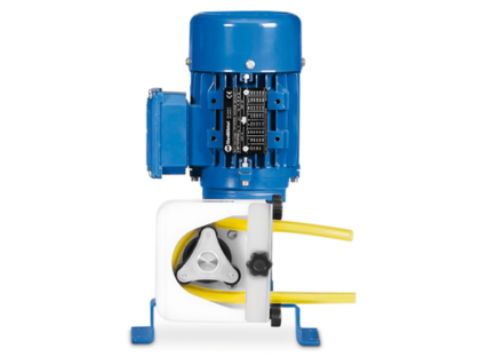
- Max Flow Rate: 1.4lpm
- Max Head: 20M
- Max Temperature: 80ºC
- Max Viscosity: 8000 cP
- Solids: 8mm
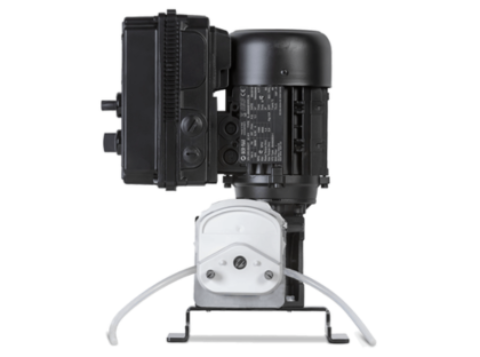
- Max Flow Rate: 0.64lpm
- Max Head: 20M
- Max Temperature: 80ºC
- Max Viscosity: 8000 cP
- Solids: 8mm
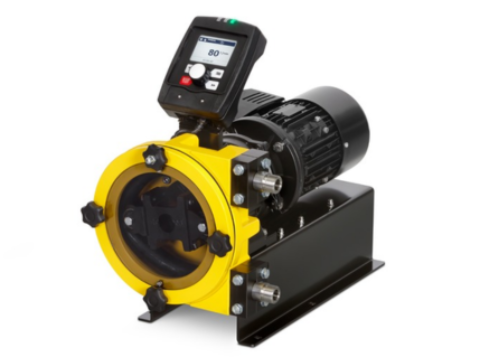
- Max Flow Rate: 6.8lpm
- Max Head: 80M
- Max Temperature: 80ºC
- Max Viscosity: 20000 cP
- Solids: 16mm
- Size: 3/4"

- Max Flow Rate: 2.4lpm
- Max Head: 80M
- Max Temperature: 80ºC
- Max Viscosity: 20000 cP
- Solids: 10mm
- Size: 3/8"

- Max Flow Rate: 3.9lpm
- Max Head: 80M
- Max Temperature: 80ºC
- Max Viscosity: 20000 cP
- Solids: 13mm
- Size: 3/8"

- Max Flow Rate: 9.6lpm
- Max Head: 80M
- Max Temperature: 80ºC
- Max Viscosity: 20000 cP
- Solids: 16mm
- Size: 3/4"

- Max Flow Rate: 12.9lpm
- Max Head: 80M
- Max Temperature: 80ºC
- Max Viscosity: 20000 cP
- Solids: 19mm
- Size: 1"

- Max Flow Rate: 20lpm
- Max Head: 80M
- Max Temperature: 80ºC
- Max Viscosity: 20000 cP
- Solids: 22mm
- Size: 1"
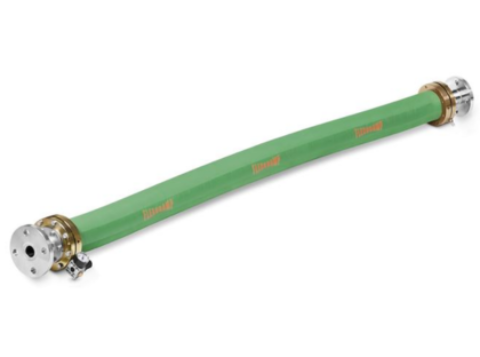
- Max Head: 80M
- Max Temperature: 110°C
- Size: 10mm to 65mm
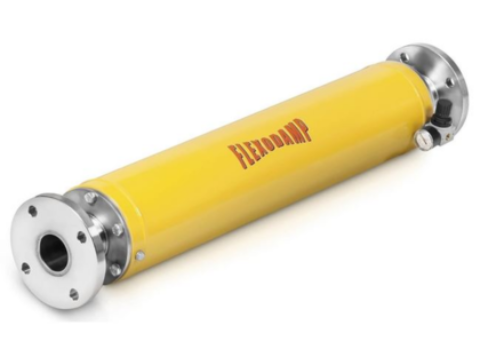
- Max Head: 150M
- Max Temperature: 110°C
- Size: 65mm to 100mm
FAQs
Peristaltic pumps are part of the rotary positive displacement pump family. They are made up of just two components; a rotor that has a number of rollers or a "shoe" attached and a flexible internal hose/tube fitted inside a circular pump casing. As the rotor turns, the attached rollers compress the tube where the fluid is contained, and that continuous motion forces the liquid from the pump's inlet to its outlet.
The beauty of the peristaltic pump design it it's single wearing part; the inner hose. Whilst other pumps have seals, impellers, bearings, gaskets and coupling bushes to maintain over time, peristaltic pumps only have to replace the inner hose. This combine with the absence of a mechanical seal means that they can also run dry indefinitely without risk of damage.
Ensuring compatibility with the fluid being pumped is a vital part of peristaltic pump specification to avoid swelling, erosion and even melting of the inner hose. Our Boyser peristaltic pumps are available with Natural Rubber, NBR, EPDM, Norprene, Tygon and Hypalon hoses. Upon disclosure of the fluid you are handling we will establish the best solution.
One of the great features of the peristaltic design is its ability to run dry without damage. This can give peace of mind when being used unmanned or to empty a tank or container.
Metering pumps are typically used to accurately delivery ingredients, additives and chemicals in food, process and water treatment industries.
A dosing pump, otherwise known as a metering pump, is designed to very precisely deliver a specific quanitity of fluid to a container, tank or fluid stream at controlled intervals.
Dosing pumps are able to provide precise metering through their smooth, pulsation free operation and ability to achieve extremely low flow rates whilst maintaining accuracy.